How to start buying crypto safely
Buying cryptocurrency for the first time feels like standing at the edge of a new financial frontier. The process is straightforward, but the stakes are real. Your first decision isn't just which coin to buy—it's choosing the platform that will hold your assets. A secure exchange is your vault; a sloppy one is an open door.
Before you move money, look at the market. Volatility is the norm, not the exception. Seeing current prices helps you avoid buying at a temporary spike.
Choose a reputable exchange
Your exchange is the bridge between your bank account and the blockchain. For beginners, centralized exchanges (CEXs) like Coinbase, Kraken, or Binance are the safest starting point. They handle the complex security infrastructure for you. Look for platforms that are regulated in your jurisdiction and have a track record of stability. Avoid obscure platforms promising high returns; if it sounds too good to be true, it is.
Verify your identity
You cannot buy crypto anonymously on regulated exchanges. This is called KYC (Know Your Customer). You will need to upload a government-issued ID and possibly a selfie. This process protects the platform from fraud and money laundering. While it feels like an inconvenience, it is a critical layer of security that ensures only you can access your account.
Create an account on your chosen exchange. Use a strong, unique password and enable two-factor authentication (2FA) immediately. Do not use SMS-based 2FA if the app supports authenticator apps or hardware keys; they are significantly harder to hack.
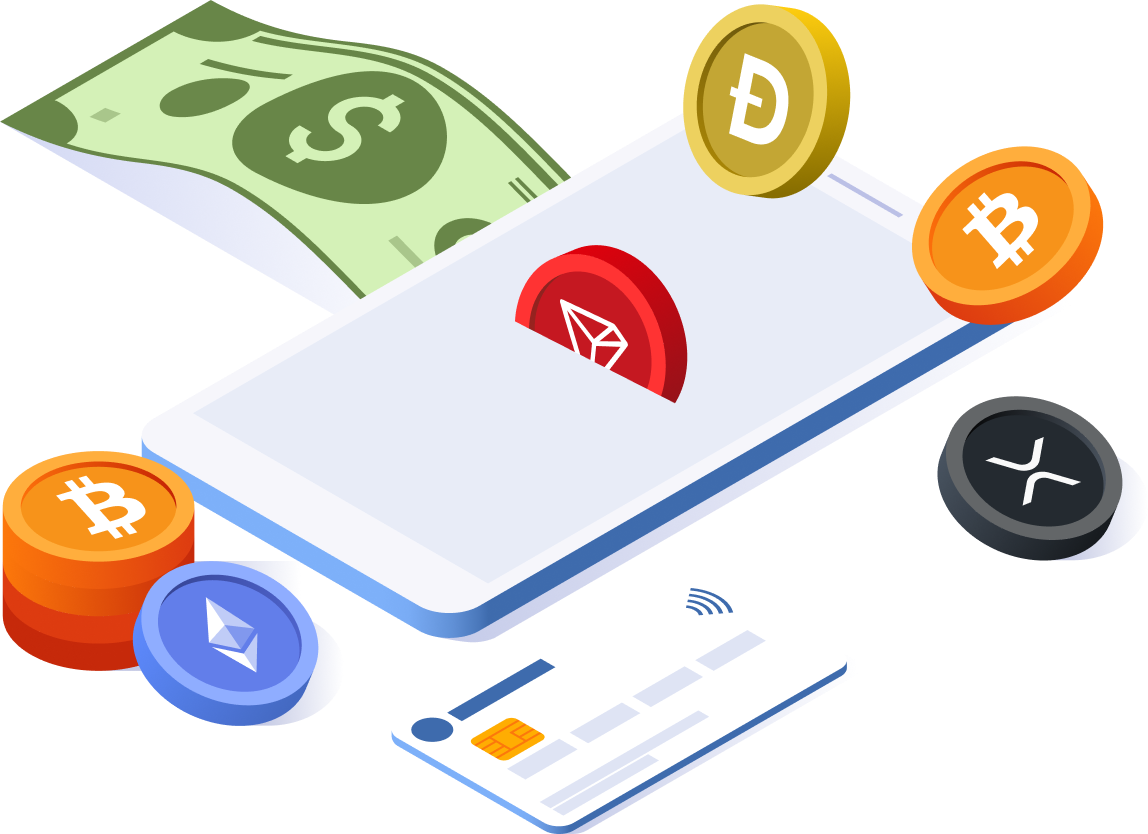
Connect your bank account or debit card. Bank transfers (ACH) usually have lower fees but take 3-5 days to clear. Debit cards are instant but often carry higher processing fees. Credit cards are generally discouraged for crypto purchases due to cash advance fees and interest rates.
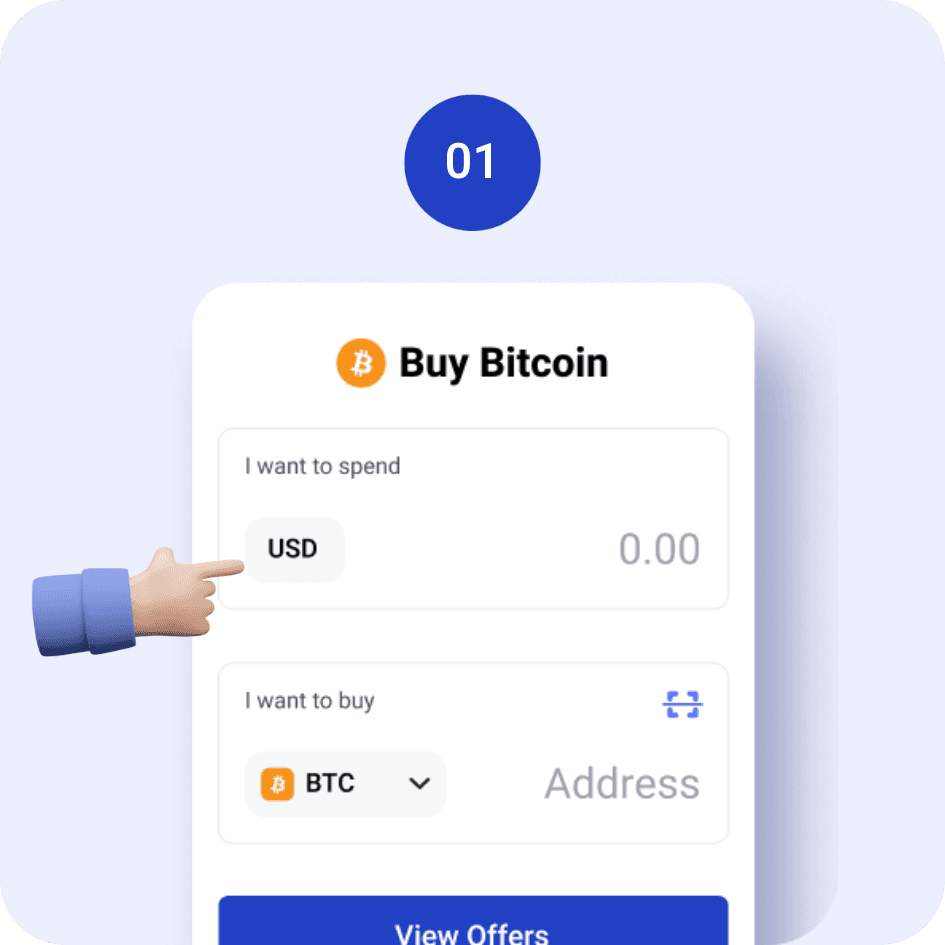
You do not need to buy a whole Bitcoin. Most exchanges allow you to buy fractional amounts. Starting with $50 or $100 is a practical way to learn the interface without risking significant capital. Select the asset, enter the dollar amount, and review the fees before confirming.
Once purchased, your crypto sits on the exchange. For small amounts, this is fine. For larger holdings, consider moving them to a personal hardware wallet. This removes your assets from the exchange's servers, protecting you if the platform is ever compromised.
Quick safety checklist
-
Enable 2FA on your exchange account
-
Verify your identity with a government ID
-
Start with a small, affordable amount
-
Review all fees before confirming
-
Consider a hardware wallet for long-term holds
Secure Infrastructure for Self-Custody
Buying crypto on an exchange is only the first step. To truly control your assets, you need to move them off centralized platforms and into your own custody. This shift requires specific hardware and software tools that prioritize security over convenience. Without the right infrastructure, your digital assets remain vulnerable to exchange hacks, frozen accounts, or platform insolvency.
Think of a hardware wallet like a digital safe deposit box. It keeps your private keys—your proof of ownership—offline and isolated from internet-connected devices. This "cold storage" method is the gold standard for long-term holding. While software wallets ("hot wallets") are useful for frequent trading, they remain connected to the internet and are more susceptible to malware. For significant holdings, the extra friction of using a hardware device is a small price to pay for peace of mind.
Essential Hardware Tools
When setting up self-custody, your first investment should be in a reputable hardware wallet. These devices generate and store private keys on a secure chip, ensuring they never touch your computer or phone directly. Popular options include Ledger and Trezor, which support hundreds of cryptocurrencies. Look for devices with open-source firmware and a strong track record of security audits. Avoid unknown brands or wallets that claim to be "unhackable" without verifiable proof.
Beyond the wallet itself, consider the physical security of your backup. Your recovery phrase—a list of 12 or 24 words—must be stored offline. Paper wallets or metal backup plates (like Cryptotag) are excellent because they resist fire, water, and time. Never store your recovery phrase digitally, in cloud notes, or as a screenshot on your phone. If your device is lost or damaged, this phrase is the only way to recover your funds.
Software and Management Tools
Once your assets are secure, you need software to interact with the blockchain. MetaMask is the most widely used browser extension and mobile app for managing Ethereum-based tokens and interacting with decentralized applications (dApps). It acts as a bridge between your hardware wallet and the web3 ecosystem. For more advanced users, tools like Ledger Live or Trezor Suite provide portfolio tracking and direct integration with their hardware devices.
Security extends to your computer and phone as well. Use a dedicated device for crypto management if possible, or at least ensure your primary machine has robust antivirus protection and a hardware security key (like a YubiKey) for two-factor authentication (2FA). Avoid SMS-based 2FA, as it is vulnerable to SIM-swapping attacks. Always verify the URL of any exchange or wallet interface before entering credentials to prevent phishing attacks.


As an Amazon Associate, we may earn from qualifying purchases.
Managing Your Keys
The most critical rule in crypto self-custody is: "Not your keys, not your coins." When you leave assets on an exchange, you are essentially holding an IOU. When you move them to a hardware wallet, you hold the actual keys. This responsibility means you are your own bank. There is no customer support to reset your password or recover your funds if you lose your recovery phrase. Write it down carefully, store it in multiple secure physical locations, and never share it with anyone. Legitimate support teams will never ask for your seed phrase.
Market research methods for 2026
Effective market research in 2026 requires distinguishing between three distinct data streams: on-chain fundamentals, technical price action, and regulatory developments. Relying on a single source leaves you vulnerable to noise. Professional analysis layers these perspectives to confirm or challenge a thesis before capital is deployed.
On-chain data provides the raw truth of network activity. Metrics like active addresses, transaction volume, and exchange inflows/outflows reveal whether real usage is growing or if liquidity is fleeing. Unlike price charts, which can be manipulated by short-term sentiment, on-chain data shows the underlying health of the protocol. Tools like Glassnode or Dune Analytics allow you to track these metrics directly from the blockchain.
Technical analysis remains essential for timing entry and exit points. While it doesn’t predict fundamental value, it identifies market psychology and momentum. Traders use indicators like Relative Strength Index (RSI) or Moving Averages to spot overbought or oversold conditions. However, technical signals should never override fundamental weaknesses. A perfect chart pattern cannot sustain a project with declining user activity.
Regulatory news acts as a binary switch for market stability. A single announcement from the SEC or EU regulators can invalidate months of technical analysis overnight. Always monitor official government channels and reputable financial news outlets for primary source updates. Ignoring the legal landscape is the fastest way to lose capital in an increasingly regulated environment.
Comparing Analysis Approaches
Understanding the strengths and weaknesses of each method helps you allocate your research time effectively.
| Method | Primary Focus | Strength | Weakness |
|---|---|---|---|
| On-Chain | Network activity | Hard data | Complex interpretation |
| Technical | Price action | Timing entries | False signals |
| Regulatory | Legal changes | Risk avoidance | Unpredictable timing |
Live Market Context
To ground your research in current reality, monitor live price action alongside your fundamental analysis.
Common questions about buying crypto
Starting to buy cryptocurrency often feels like navigating a maze of rules and minimums. You might worry about whether your budget is large enough or how the government will treat your gains. These concerns are valid, but the barriers to entry are lower than most people think, and the tax rules are specific enough to manage if you know where to look.
Is $100 enough to invest in crypto?
Yes, $100 is enough to start. Most major exchanges allow you to buy fractions of coins, so you do not need to purchase a whole Bitcoin or Ethereum to participate. Starting with a small amount like $50 or $100 lets you learn the mechanics of buying, storing, and tracking your assets without risking significant capital. This approach helps you focus on the learning curve rather than chasing immediate profits.
What is the 30-day rule in crypto?
The 30-day rule is a tax concept primarily used in the UK and some other jurisdictions to prevent tax avoidance through rapid trading. If you sell a cryptocurrency and buy the same type of coin within 30 days, the cost of the newly purchased crypto is treated as the cost basis for the one you sold. This means you cannot claim a loss on the sale if you immediately replace the position. It is crucial to check your local tax authority’s guidelines, as this rule does not apply universally in all countries, such as the United States.
Can I buy crypto without a bank account?
While most regulated exchanges require a bank account or debit card for fiat on-ramps, there are alternatives. Peer-to-peer (P2P) platforms allow you to buy directly from other users using various payment methods, including cash deposits or gift cards. Additionally, some Bitcoin ATMs allow cash purchases, though fees are typically higher. Always verify the reputation of any non-traditional platform to avoid scams.
No comments yet. Be the first to share your thoughts!