How to buy crypto safely
Buying cryptocurrency is straightforward, but doing it securely requires a few deliberate steps. The biggest risk isn't market volatility; it's using unregulated platforms or skipping basic security hygiene. Treat your first purchase like setting up a new bank account: verify the institution, secure the access, and start small.
Your first decision is where to buy. Stick to established, publicly traded companies or those registered with financial authorities like the SEC or FCA. Avoid obscure apps that promise high returns or lack clear regulatory filings. Regulated exchanges are required to follow anti-money laundering (AML) laws, which adds a layer of accountability for your funds.
Legitimate exchanges require Know Your Customer (KYC) verification. This means uploading a government ID and sometimes a selfie. While this feels invasive, it is the primary defense against identity theft on the platform. If a site allows you to buy large amounts without verification, it is likely operating in a legal gray area and poses a higher risk of being shut down or hacked.
Connect a bank account or debit card for funding. Bank transfers (ACH) typically have lower fees but take a few days to clear. Debit cards are faster but often carry higher transaction fees due to processing costs. Credit cards are generally discouraged for buying crypto because they are treated as cash advances by most issuers, incurring immediate interest and fees.
Before making your first purchase, secure your account. Use an authenticator app (like Google Authenticator or Authy) rather than SMS-based 2FA. SIM swapping is a common attack vector where hackers intercept your text messages to bypass password protection. An app generates codes locally on your device, making it significantly harder for attackers to gain access.
Don't buy your full intended amount immediately. Start with a small sum to ensure the withdrawal process works and that you understand the platform's interface. Once you confirm you can move funds to your own wallet or sell them back successfully, you can proceed with larger amounts. This step also helps you identify any hidden fees or processing delays before you commit significant capital.
Compare exchange infrastructure
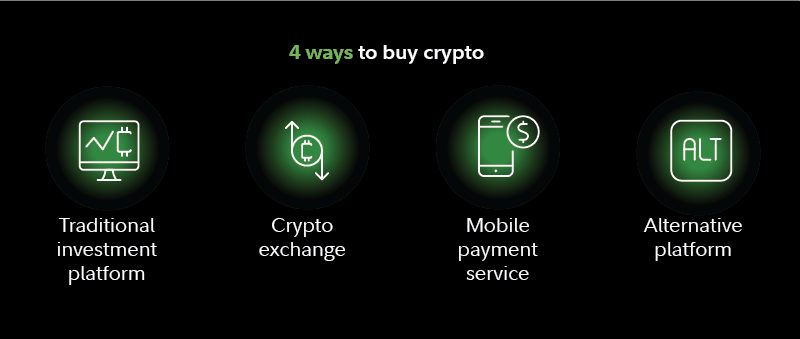
Choosing where to buy crypto depends on how much control you want over your assets and how much you're willing to pay in fees. The market offers three distinct paths: centralized exchanges (CEX), decentralized exchanges (DEX), and traditional brokerage platforms. Each has different trade-offs regarding security, liquidity, and ease of use.
Centralized exchanges like Coinbase or Binance act as intermediaries. They offer high liquidity and familiar user interfaces, making them ideal for beginners. However, you must trust the platform to safeguard your funds. Decentralized exchanges (DEX) like Uniswap allow peer-to-peer trading without a middleman, giving you full custody of your assets but requiring more technical knowledge. Brokerages, such as Fidelity or traditional apps like Cash App, offer the simplest entry points but often come with higher spreads and less direct ownership of the underlying tokens.
The table below breaks down the key differences to help you decide which infrastructure fits your needs.
| Type | Asset Custody | Typical Fees | Best For |
|---|---|---|---|
| Centralized Exchange (CEX) | Platform holds keys | Low trading fees (0.1-0.5%) | High liquidity & beginners |
| Decentralized Exchange (DEX) | User holds keys | Network gas + protocol fees | Privacy & self-custody |
| Traditional Brokerage | Broker holds assets | Higher spreads (1-3%) | Simplicity & fiat on-ramp |
For most new investors, starting with a reputable centralized exchange provides the best balance of security and ease of use. As you become more comfortable, you can explore DEXs for specific tokens or use brokerages for passive exposure through ETFs. Always verify the platform's security history and regulatory status before depositing significant funds.
Secure your digital assets
When you buy crypto, the first decision isn't which coin to pick—it's where to keep it. Most beginners leave their coins on exchanges, but this is similar to leaving cash in a register rather than a vault. If the exchange faces regulatory trouble or a security breach, your assets are at risk. To truly own your crypto, you need self-custody.
Self-custody means you hold the private keys to your wallet. This gives you full control but also full responsibility. If you lose your keys, your funds are gone forever. For significant holdings, hardware wallets are the standard for security. These devices store your keys offline, making them immune to online hacks.
Choosing the right hardware wallet depends on your needs. Look for devices with a proven track record, open-source firmware, and strong community support. The following options are widely recommended for their reliability and security features.


As an Amazon Associate, we may earn from qualifying purchases.
Start by moving small amounts to your new wallet to test the setup. Once you confirm the process works, transfer the rest of your holdings. This practice ensures you understand the recovery process before committing significant value.
Apply market research tactics
Before you commit capital, you need to treat crypto due diligence like a financial audit, not a gamble. This means looking past the hype on social media and examining the actual mechanics of the asset. A robust buy crypto guide always emphasizes that understanding the underlying technology and market dynamics is the only way to manage risk effectively.
Start by scrutinizing the project’s whitepaper. This document should clearly define the problem the project solves, the technical solution, and the tokenomics. If the whitepaper is vague, overly promotional, or lacks a clear roadmap, it is a red flag. You are looking for a project with a transparent team and a verifiable use case, not just a promise of future value.
Next, leverage on-chain data to see what is actually happening on the network. Tools like Etherscan or Blockchain.com allow you to track transaction volumes, active addresses, and holder distribution. If a token has high trading volume but low active users, it may be driven by speculation rather than genuine adoption. This data provides an objective layer of validation that social sentiment alone cannot offer.
Finally, analyze market sentiment and technical trends. While sentiment can shift quickly, technical indicators help you understand the broader market structure. For example, looking at a long-term chart for Bitcoin can reveal support and resistance levels that inform your entry and exit points. Combining fundamental research with technical awareness helps you make decisions based on evidence rather than emotion.
Build a disciplined strategy
The market moves fast, but your strategy shouldn't. A buy crypto guide is only as good as the discipline behind it. Without a plan, you are gambling, not investing. Emotional trading is the fastest way to lose capital. You need rules that keep you steady when the charts turn red.
Set your allocation limits
Start by deciding how much of your total portfolio crypto can occupy. For most investors, a small percentage—between 1% and 5%—is enough to capture upside without risking financial stability. This number should be based on your risk tolerance, not your FOMO. If the market drops 50%, your overall wealth should remain intact. Treat crypto as a high-volatility asset class, similar to venture capital, not a savings account.
Use dollar-cost averaging
Timing the bottom is impossible. Instead, use dollar-cost averaging (DCA). This means buying a fixed amount at regular intervals, regardless of price. If you invest $100 every week, you buy more when prices are low and less when they are high. This smooths out your average entry price and removes the stress of watching the clock. It turns market volatility from a threat into a tool.
Secure your assets
Buying crypto is only the first step. Keeping it is the real challenge. Never leave large amounts on exchanges. Use a hardware wallet for long-term holdings. Enable two-factor authentication on every account. If you cannot verify the security of your storage, you do not own the crypto; you own an IOU from a platform that could fail. Security is not an afterthought; it is the foundation of your strategy.
Common questions about buying crypto
Buying digital assets involves practical steps and real risks. Here are answers to the most frequent questions we receive from beginners starting their crypto journey.
No comments yet. Be the first to share your thoughts!