How to buy cryptocurrency safely
Buying your first cryptocurrency involves more than just entering a card number. It requires choosing a reliable exchange and securing your account before you make a move. Think of your first purchase as setting up a foundation; if the base is weak, everything built on top becomes risky.
1. Choose a regulated exchange
Start by selecting a platform that is registered and compliant in your jurisdiction. Popular options like Coinbase, Binance, and Kraken are widely used, but "popular" does not always mean "safe" for your specific location. Look for exchanges that publish proof of reserves and have a clear track record of regulatory compliance. This step is critical because the platform holds your funds until you decide to move them elsewhere.
2. Verify your identity (KYC)
Almost every legitimate exchange requires Know Your Customer (KYC) verification. This process involves uploading a government-issued ID and sometimes a selfie. While it feels like an extra step, it is the primary defense against identity theft and fraud on the platform. Exchanges that skip this step are often operating in legal gray areas and may not offer customer support if something goes wrong.
3. Connect a payment method
Link a bank account or debit card to your exchange wallet. Bank transfers (ACH or SEPA) usually have lower fees than credit card purchases, which can sometimes be treated as cash advances by your bank. Confirm your payment method by making a small test transaction to ensure the funds clear correctly before attempting a larger buy.
4. Enable two-factor authentication (2FA)
Before you deposit any significant amount, enable two-factor authentication. Use an authenticator app like Google Authenticator or Authy rather than SMS-based codes. SMS codes can be intercepted through SIM swapping attacks, whereas authenticator apps generate codes locally on your device. This adds a second layer of security that makes unauthorized access significantly harder.
5. Execute your first buy
Go to the "Buy" section of your chosen exchange. Enter the amount of USD or EUR you wish to spend. Review the transaction details, including the exchange fee and the estimated amount of crypto you will receive. Confirm the purchase. Your crypto will now appear in your exchange wallet, ready to be held or transferred to a private hardware wallet for long-term storage.
Choosing the right exchange infrastructure
Picking an exchange is like choosing a bank: you want one that is secure, affordable, and easy to use. The biggest platforms—Coinbase, Binance, and Kraken—serve different needs. Coinbase is known for its user-friendly interface, making it a common starting point for newcomers. Binance offers the widest selection of assets and the lowest fees, appealing to active traders. Kraken strikes a balance with strong security records and a straightforward interface.
When comparing platforms, focus on three core pillars: security, fees, and usability. Security is non-negotiable; look for platforms with cold storage, two-factor authentication, and a history of transparent incident reporting. Fees vary significantly between platforms, affecting your long-term returns, especially if you trade frequently. Usability matters too; a confusing interface can lead to costly mistakes, so test the platform’s interface before depositing funds.
The table below compares major exchanges across these critical dimensions to help you decide which infrastructure fits your strategy.
| Platform | Security Focus | Fee Structure | Best For |
|---|---|---|---|
| Coinbase | High (Public Company, Cold Storage) | Higher (0.5%-1.5%) | Beginners |
| Binance | High (SAFU Fund, 2FA) | Low (0.1%) | Active Traders |
| Kraken | High (Audited, Cold Storage) | Low (0.16%-0.26%) | Intermediate Users |
Essential hardware for secure storage
Keeping your crypto on an exchange is like leaving your savings in a wallet with a broken lock. Hardware wallets solve this by storing your private keys offline, creating a physical barrier between your assets and online threats. This "cold storage" method ensures that even if your computer is compromised, your funds remain safe.
Think of a hardware wallet as a specialized, isolated computer that only signs transactions. You connect it when you need to send funds, but it never exposes the private key itself to your internet-connected device. This architecture is the industry standard for anyone holding significant value.
When choosing a device, prioritize established brands with open-source firmware and a long track record of security audits. The market offers several reliable options, each with slight variations in usability and supported coins.


As an Amazon Associate, we may earn from qualifying purchases.
Your choice depends on how you interact with your assets. Ledger offers a broad app ecosystem, Trezor provides transparent open-source code, and Tangem offers a card-based form factor that fits in a wallet. Regardless of the brand, always purchase directly from the manufacturer to avoid tampered devices.
Market research and investment strategy
Building a crypto portfolio requires treating digital assets as a distinct asset class rather than a get-rich-quick scheme. The most effective approach combines rigorous market research with disciplined risk management. Instead of chasing short-term hype, successful investors focus on long-term stability, fundamental analysis, and infrastructure security.
Start with a clear risk framework
Before buying any token, you must define your risk tolerance. Crypto markets are volatile, and prices can swing dramatically in short periods. A common mistake is investing money that you might need for daily expenses or emergency funds. A prudent strategy is to allocate only a small percentage of your total investment portfolio to crypto—often 1-5% for conservative investors.
Consider using dollar-cost averaging (DCA) to mitigate timing risk. Instead of buying a large amount at once, you invest a fixed amount at regular intervals (e.g., $50 weekly). This smooths out the purchase price over time and removes the emotional stress of trying to "time the bottom." Charles Schwab notes that starting small and focusing on long-term goals is often more sustainable than trying to predict market tops and bottoms [1].
Focus on fundamentals, not just price
Market research should go beyond looking at a price chart. Evaluate the underlying technology, the team behind the project, and its real-world utility. Major cryptocurrencies like Bitcoin and Ethereum have established networks, developer ecosystems, and clear use cases. Altcoins often lack this infrastructure and carry higher risks.
Always verify the security of the platform you use. Reputable exchanges with strong compliance records and insurance funds offer better protection than obscure, unregulated platforms. Prioritize platforms that are transparent about their reserves and security audits.
Monitor the market
Keeping an eye on broader market trends helps inform your decisions. While technical analysis can provide short-term signals, long-term success usually depends on understanding macroeconomic factors like interest rates and regulatory changes.
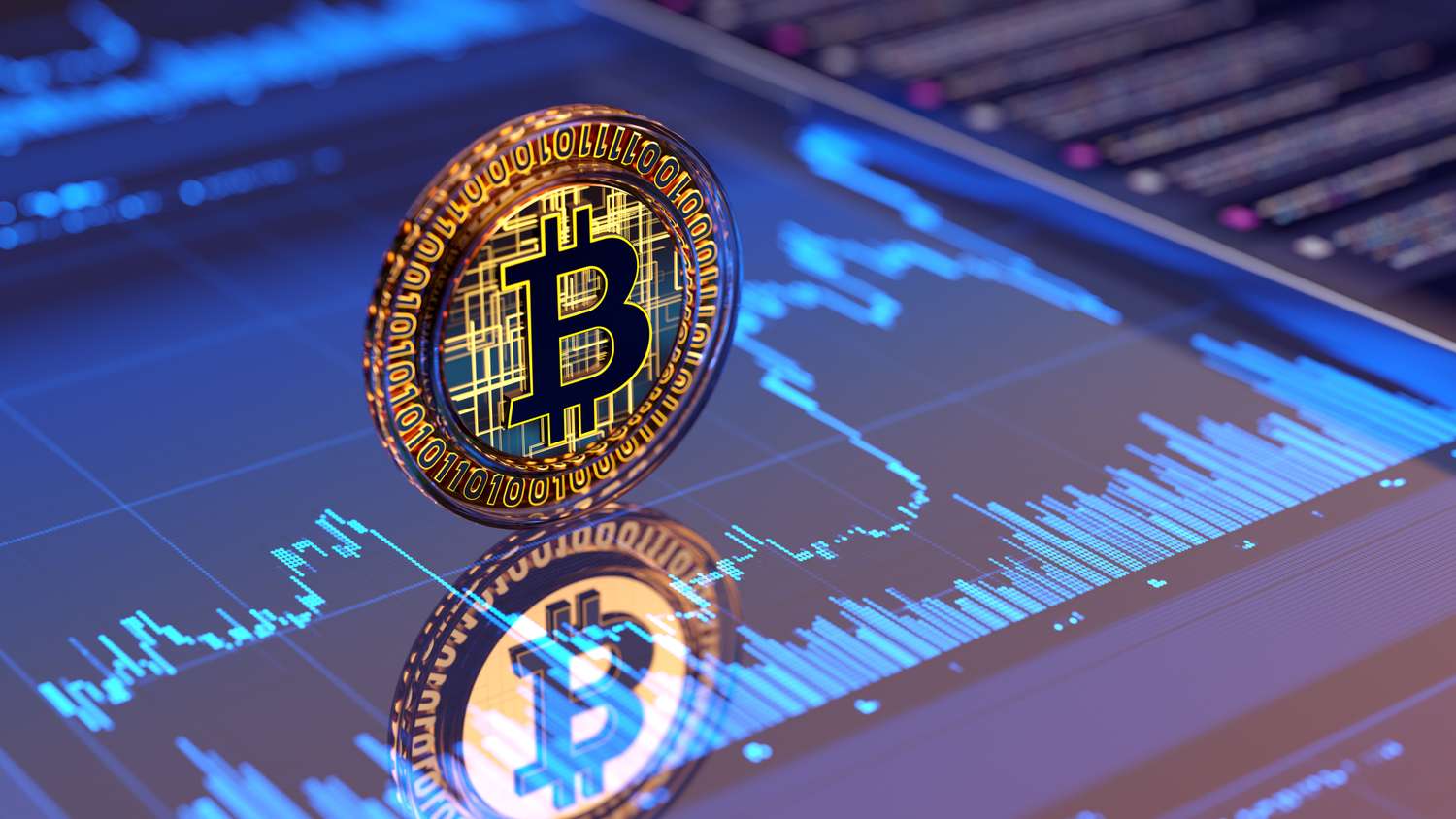
Weekly chart of Bitcoin (BTC) showing long-term trend and trading volume.
By combining a conservative risk profile with fundamental research, you can approach the crypto market with more confidence and less exposure to unnecessary volatility.
Protecting your assets from common risks
Buying crypto is only the first step; keeping it safe is where most investors stumble. The decentralized nature of digital assets means there is no customer service line to call if you make a mistake or fall victim to a scam. Your private keys are your responsibility, and losing them means losing your funds forever.
Never share your seed phrase or private keys with anyone. Legitimate platforms, support teams, or developers will never ask for this information. If someone does, it is a scam. Store your recovery phrase offline in a secure location, such as a fireproof safe, and never digitize it in a text file, email, or cloud storage.
Be wary of phishing attempts. Scammers often create fake websites that mimic legitimate exchanges or wallet providers to steal your login credentials. Always double-check the URL and use bookmarks for sites you visit frequently. Enable two-factor authentication (2FA) on all accounts, preferably using an authenticator app rather than SMS, which can be intercepted.
The reality of self-custody risks
When you hold your own assets in a non-custodial wallet, you become your own bank. This offers greater control and privacy, but it also increases your exposure to technical errors and malicious actors. A single typo in a transaction address can result in irreversible loss of funds.
Hardware wallets provide an extra layer of security by keeping your private keys offline. They are generally more secure than software wallets, which are connected to the internet. However, even hardware wallets can be compromised if you connect them to a malicious computer or enter your seed phrase on a fake device.
Stay informed about common scams, such as "rug pulls" in decentralized finance or impersonation schemes on social media. If an investment opportunity sounds too good to be true, it likely is. Always verify the legitimacy of projects through official channels and reputable sources before connecting your wallet or sending funds.
No comments yet. Be the first to share your thoughts!