Choosing the right exchange platform
The foundation of your crypto strategy isn't just which coins you pick—it's where you buy them. In 2026, the landscape has shifted decisively toward regulated infrastructure. The era of anonymous, offshore platforms is fading, replaced by entities that must adhere to strict compliance standards. For beginners, this shift is a safety net; for institutions, it's a requirement.
Selecting a platform requires matching your specific profile to the right infrastructure. If you are a US-based retail investor, you likely need a publicly traded company like Coinbase or a traditional broker like Fidelity, which offer crypto ETPs and ETFs alongside traditional assets. These platforms prioritize regulatory compliance and security, making them ideal for those new to the space. However, if you are an institutional trader or a global user seeking deeper liquidity and advanced trading pairs, you might look toward platforms like Binance or Kraken, which operate under different regulatory frameworks but offer more sophisticated tools.
To help you compare these options quickly, here is a side-by-side look at how major exchanges typically stack up against key criteria like regulatory status, asset variety, and target audience.
| Platform | Regulatory Status | Asset Range | Best For |
|---|---|---|---|
| Coinbase | US-Regulated (Public) | Limited (Curated) | US Retail & Beginners |
| Fidelity | US-Regulated (Traditional Broker) | Low (ETFs/ETPs) | Traditional Investors |
| Kraken | Global (Multi-Jurisdiction) | High (100+ coins) | Global Retail & Traders |
| Binance | Global (Varies by Region) | Very High (500+ coins) | Advanced/Global Users |
Security is non-negotiable. Regardless of the platform you choose, the infrastructure must support cold storage solutions and two-factor authentication. While exchanges are convenient for trading, they are not vaults. Moving your assets to a hardware wallet after purchase is a critical step in securing your holdings. For those looking to take physical control of their private keys, here are some top-rated hardware wallets that provide secure storage, aligned with the infrastructure theme.


As an Amazon Associate, we may earn from qualifying purchases.
Ultimately, the "right" exchange is the one that balances your need for accessibility with your requirement for security. Start with a regulated platform that aligns with your jurisdiction, then layer on self-custody solutions as your portfolio grows.
Spotting market signals with charts
Technical analysis is less about predicting the future and more about understanding the current mood of the market. For beginners, staring at a blank screen can be intimidating, but charts provide a visual history of price action that helps you identify trends, support levels, and potential entry points. Instead of guessing, you can use these tools to see where the money is flowing.
Start by looking at the broader trend. Bitcoin, often considered the simplest entry point due to its long track record and high liquidity, tends to move in waves. By observing the daily or weekly chart, you can determine if the asset is in an uptrend or downtrend. This context is crucial; buying during a strong downtrend is generally riskier than buying during a pullback in an uptrend.
To help you visualize this, here is a live chart of Bitcoin against the US Dollar. You can toggle between different timeframes to see how price action changes over hours, days, or months. This interactive view allows you to spot patterns like higher highs or lower lows, which are the building blocks of technical analysis.
While charts provide the "what," they don't always explain the "why." Always combine technical signals with fundamental knowledge. Understanding the underlying technology and market dynamics of the asset you are buying, as explained by primary sources like NerdWallet, ensures you are making informed decisions rather than just following lines on a screen.
Monitor live asset prices
Static screenshots of prices are useless for timing your entry. If you are buying Bitcoin or Ethereum, you need to see the current market value to avoid purchasing at a local peak. Live data widgets provide the real-time valuations necessary for making informed decisions during volatile market shifts.
Use provider-backed tools to track price action directly. These widgets pull from major exchanges, ensuring you are looking at accurate, up-to-the-minute data rather than stale figures from a blog post. This immediacy helps you spot trends before they become obvious to the broader market.
Watching the chart is only half the battle. You also need to understand the underlying asset. Bitcoin is often the simplest first crypto because it has a clear narrative, limited supply, and high liquidity. Ethereum offers exposure to a broader ecosystem of decentralized applications. Knowing which asset you are watching helps you interpret the price movement correctly.
Compare fees, limits, and security
Choosing a platform comes down to three practical factors: how much it costs to trade, how easily you can move money in and out, and how your funds are protected. These elements matter more than flashy marketing because they directly impact your long-term returns and access to capital.
Trading fees vary significantly between platforms. Coinbase, for example, offers a user-friendly interface but charges higher transaction fees compared to some competitors. Schwab provides a more traditional brokerage experience with lower fees for certain actions. Always check the current fee schedule on the official site, as these rates can change.
Withdrawal limits determine how quickly you can access your assets. Some platforms impose daily or monthly caps on withdrawals, which can be a bottleneck if you need to move large sums or react to market shifts. Security features, such as two-factor authentication and cold storage, are non-negotiable. Look for platforms that offer insurance on fiat deposits and robust protection for digital assets.
The table below summarizes key differences between major exchanges to help you compare options side-by-side.
| Exchange | Maker Fee | Taker Fee | Daily Withdrawal Limit | Key Security Features |
|---|---|---|---|---|
| Coinbase | 0.40% | 0.60% | $250,000 (verified) | 2FA, Biometric Login, FDIC Insurance (Fiat) |
| Schwab | 0% (for qualified trades) | 0% (for qualified trades) | Varies by account type | 2FA, Cold Storage, SIPC Protection (Fiat) |
| Kraken | 0.16% | 0.26% | $50,000 (Standard) | 2FA, Cold Storage, Global Settings Lock |
Securing your digital assets
When you buy crypto on an exchange, you don’t truly own it—you hold an IOU. If the platform fails, gets hacked, or freezes withdrawals, your assets can disappear overnight. Self-custody means you control the private keys, turning your crypto into actual digital property. It is the single most important step in protecting your wealth.
1. Choose a hardware wallet
Hardware wallets store your private keys offline, making them immune to remote hacking attempts. Look for devices from established manufacturers like Ledger or Trezor that have a strong track record of security and open-source firmware. Avoid software wallets for large holdings, as they remain connected to the internet and are vulnerable to malware.
Buy a hardware wallet directly from the manufacturer’s official website. Never purchase from third-party sellers like Amazon or eBay, as devices may be tampered with before they reach you. Verify the seal and packaging upon arrival to ensure integrity.
During setup, the device will generate a 12 or 24-word recovery phrase. This is your master key. Write it down on the provided card or high-quality paper. Never store it digitally, screenshot it, or save it in a password manager. If you lose this phrase, your funds are gone forever.
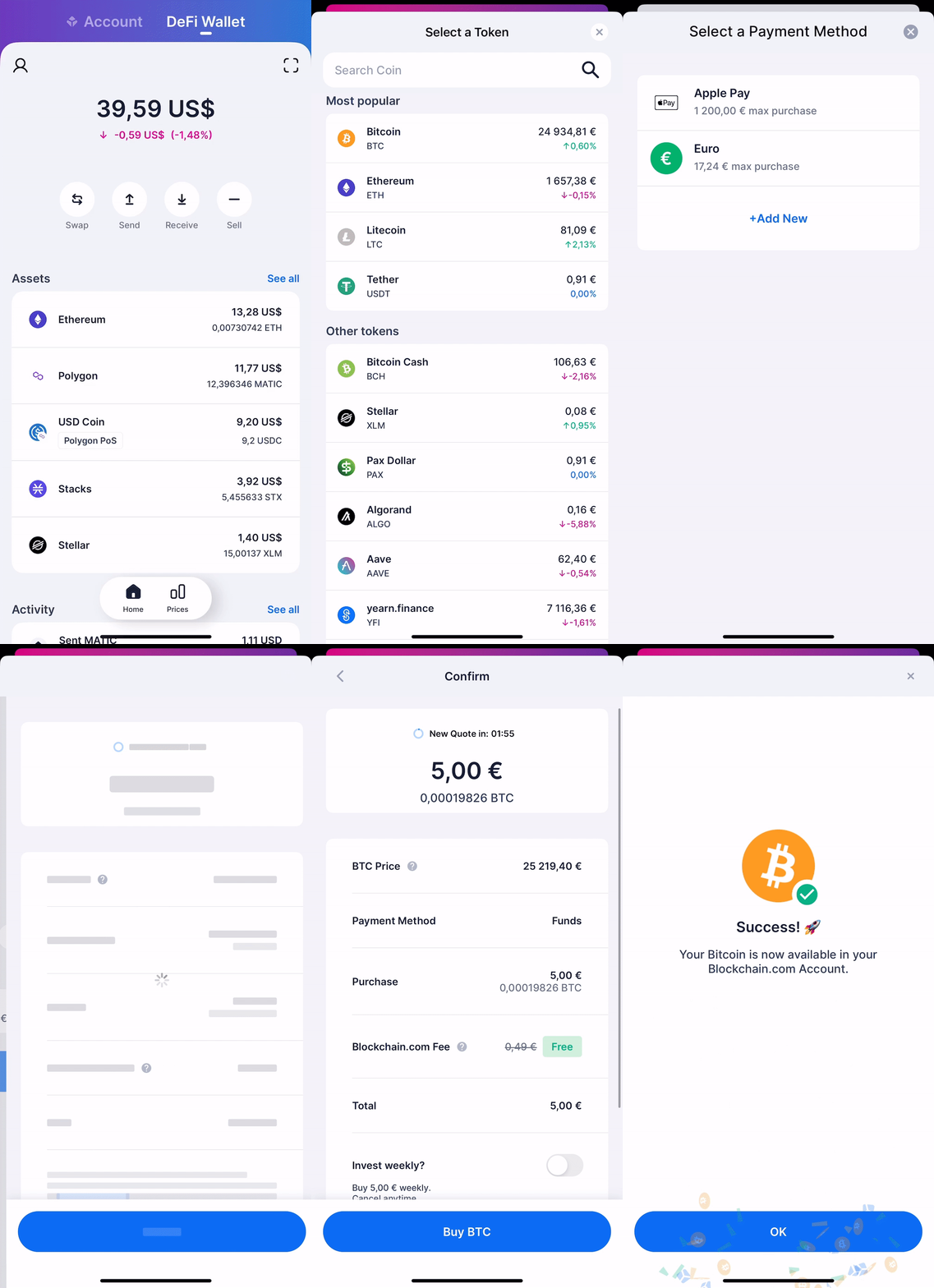
Send your crypto from the exchange to your hardware wallet address. Start with a small test transaction to confirm the address is correct. Once verified, move the rest of your holdings. You can now disconnect the device and store it in a safe place, keeping your assets offline and secure.
No comments yet. Be the first to share your thoughts!